
The Wood as a Contested Sanctuary
Lady Chatterley's LoverThis flow traces the wood’s shifting meaning as private estate, industrially threatened landscape, and temporary sanctuary for bodily connection.
increasing Bearing strength in each event
 decreasing
Bearing strength in each eventdecreasingA Private Inheritance
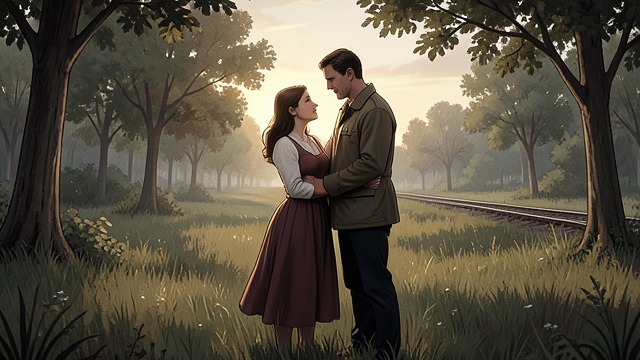
A Private Inheritance
Clifford’s claim
Clifford describes the wood as the heart of England and wishes to preserve it as part of his family’s inheritance. His attachment expresses genuine affection for the trees and a desire to protect an older landscape.
Yet his language also treats the wood as property whose access and future belong to the estate. Connie hears the tension between preserving a place and claiming authority over it.
Tradition under pressure
The wood has already been cut for wartime timber, opening views of new industrial works. Clifford’s ideal of an untouched sanctuary is therefore contradicted by the history of his own family and the surrounding economy.
The landscape becomes a meeting point between nostalgia and change. Its beauty matters, but its preservation cannot be separated from ownership and industrial power.
A Refuge Shared Uneasily
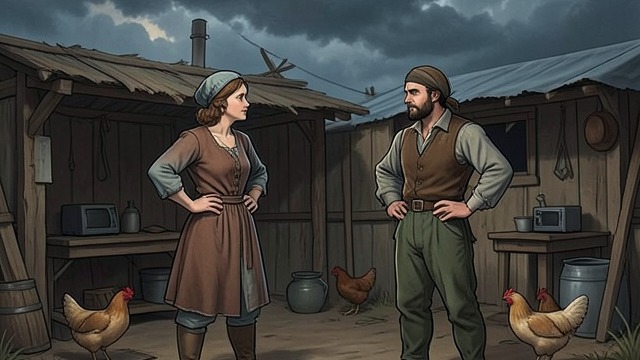
A Refuge Shared Uneasily
Solitude and trespass
Mellors uses the hut as a private refuge and workplace within the estate. Connie’s request for access unsettles him because his employment leaves him little space that is fully his own.
Their disagreement makes the wood a contested place rather than a neutral symbol of nature. Connie’s access reflects her authority, while Mellors’s resistance asserts a personal boundary.
Contact through care
The breeding hens and chicks eventually give Connie and Mellors a shared focus. Their attention to fragile life creates a quieter form of contact before their relationship becomes openly sexual.
The hut’s sanctuary depends on delicate negotiation. Nature permits closeness, but does not erase the social arrangement that gives Connie more power over the place.
Sanctuary Under Siege
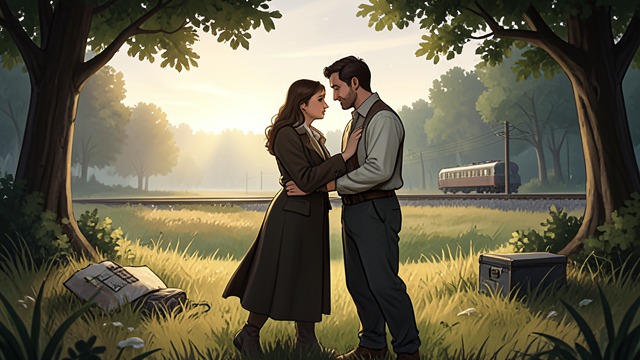
Sanctuary Under Siege
The return of machinery
Mellors sees the lights of Stacks Gate and hears the engines after Connie leaves. He understands that the wood cannot protect them indefinitely from industrial work, roads, and social surveillance.
His fear gives the natural setting a political dimension. The trees and lovers are both vulnerable to forces that value production and control over living forms.
Hope without escape
Connie and Mellors find moments of privacy in the wood, but the industrial world remains near enough to shape their future. Their refuge is real yet temporary.
The novel rejects the idea that nature can simply remove the lovers from history. Their task is to carry tenderness into the world beyond the trees, not to imagine that the trees can make that world disappear.
During Clifford and Connie’s early walk in the wood
After Connie discovers Mellors’s pheasant-rearing hut
After Connie and Mellors’s first encounter in the wood
